
Selective Dorsal Rhizotomy (SDR) is a specialized neurosurgical procedure offered as a national service in Scotland to help children with cerebral palsy. The primary goal of the surgery is to reduce spasticity (stiff or tight muscles) in the lower limbs, improving mobility, comfort, and independence.
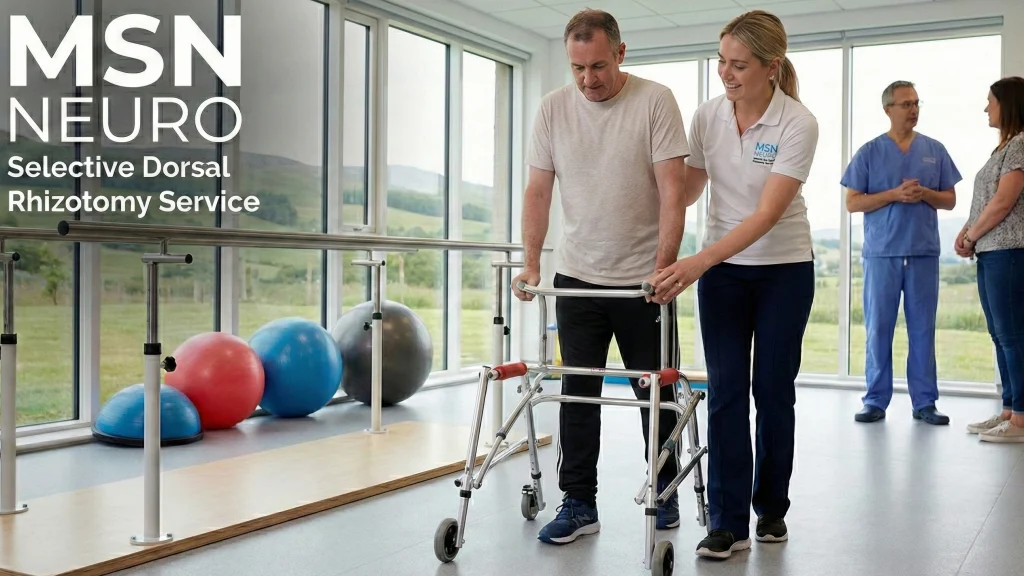
What is Selective Dorsal Rhizotomy?
SDR is an irreversible operation that involves dividing some of the sensory nerve rootlets in the lower spinal cord. These specific nerves are responsible for sending the abnormal signals that cause muscle stiffness in children with spastic diplegia. By interrupting these signals, the surgery permanently reduces the “pull” of the muscles, allowing for more natural movement.
The Scottish National Service
The SDR service is a collaborative effort across Scotland’s major paediatric centres. The surgical procedure is currently performed at:
- The Royal Hospital for Children, Glasgow
- The Royal Hospital for Children and Young People, Edinburgh
This national service ensures that children from all regions of Scotland have access to the same high standards of clinical assessment, surgery, and post-operative care.
Suitability and Selection Criteria
SDR is a highly effective treatment, but it is not suitable for every child. A multi-disciplinary team (MDT) including neurosurgeons, neurologists, and physiotherapists carefully assesses each candidate. General criteria for the Scottish service include:
- Diagnosis: Spastic diplegic cerebral palsy.
- Age: Typically between 4 and 10 years of age.
- Mobility: Children usually within GMFCS levels II or III (those who can walk with or without aids).
- Strength: Adequate underlying muscle power in the legs and trunk.
- Commitment: The child and family must be prepared for a long-term, intensive physiotherapy programme.
The Surgical Procedure
The surgery takes approximately four to five hours and is performed under general anaesthesia. Using a single-level laminectomy (a small opening in the spine), the surgeon identifies and tests individual sensory nerve rootlets using electrophysiological monitoring. Between 50% and 70% of the rootlets that contribute most to spasticity are divided, while all motor nerves are preserved to maintain muscle control.
Rehabilitation: The Journey to Recovery
Surgery is only the first step. The success of SDR depends heavily on the rehabilitation that follows.
- Inpatient Stay: Following surgery, children typically remain in the hospital for several days to begin their recovery.
- Intensive Physiotherapy: For the first six months, patients participate in a rigorous exercise programme to build strength in muscles that were previously hidden by spasticity.
- Long-term Support: Rehabilitation and monitoring continue for up to two years, coordinated between the national centres and local community physiotherapy teams.
Referral Process
Referrals to the Scottish SDR service should be made by the child’s local clinical team (Paediatrician or Physiotherapist). If you are a parent or carer, please discuss SDR with your local lead clinician to determine if an initial assessment is the right next step for your child.
Suggested Sidebar / Quick Info Box
- Service Leads: Ms. Jennifer Brown (National Clinical Director), Mr. David Bennett.
- Co-ordinator: Ms. Jacqueline Clark.
- Key Fact: The first operation under this national service took place on June 30th, 2017.
- Resources: (Links to “SDR Information for Families” and “Professional Referral Guidelines” PDFs).